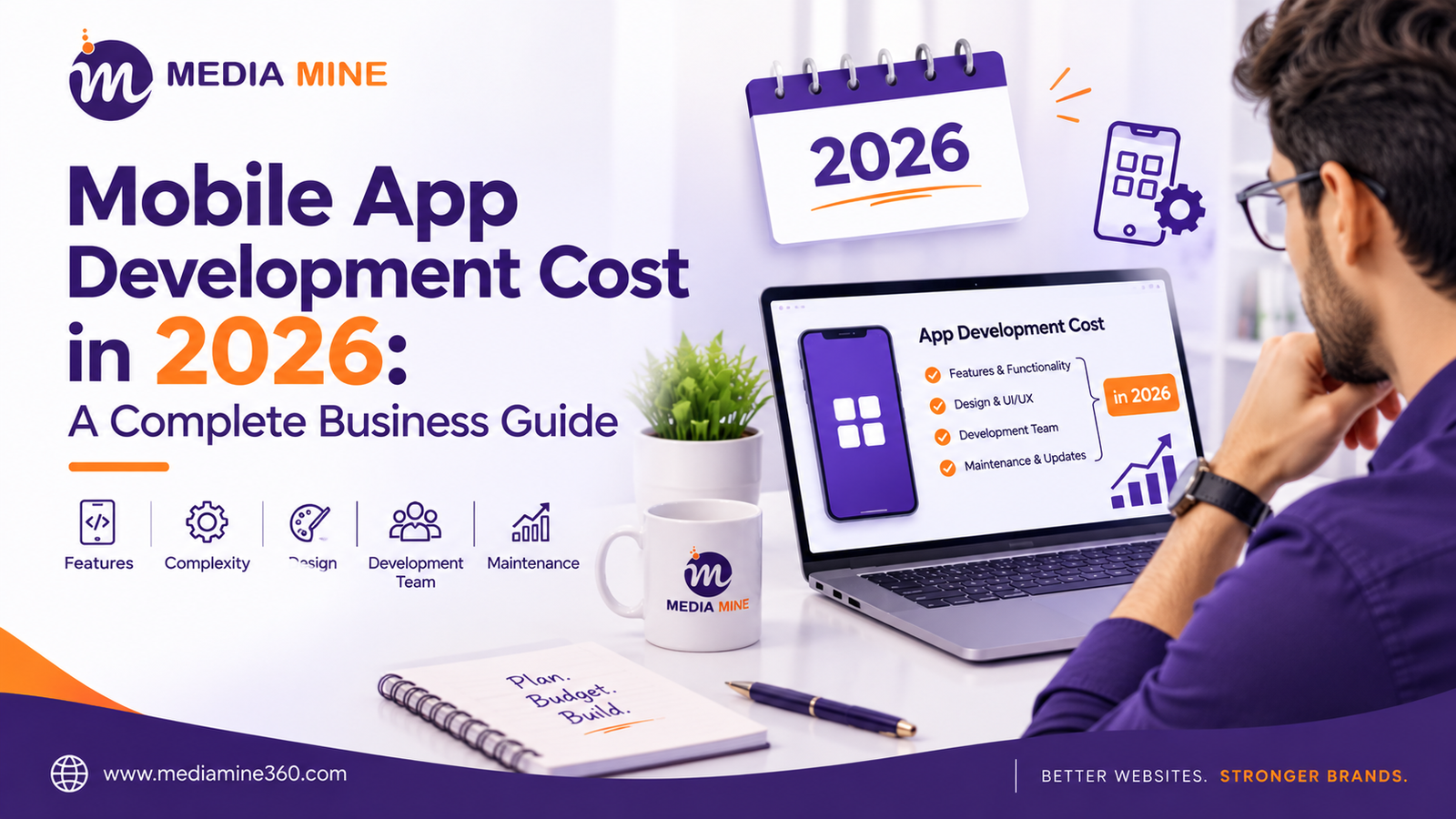
Quick answer: In 2026, mobile app development cost typically ranges from $10,000 to $40,000 for a simple app, $40,000 to $100,000 for a mid-complexity app, and $100,000 to $300,000+ for a complex, enterprise-grade app. The final price depends on features, platforms, design, team location and ongoing maintenance.
If you are planning to build an app, “How much will it cost?” is probably your first question. It is also the hardest one to answer, because no two apps are alike. This guide breaks down what you will actually pay for, why quotes vary so much, and how to avoid overspending.
What Is Mobile App Development Cost?
Mobile app development cost is the total investment needed to plan, design, build, test, launch and maintain a mobile application. It covers more than coding. It includes research, UI/UX design, backend development, testing, app store fees and long-term updates.
Many businesses budget only for development and are surprised later by hosting, bug fixes and updates. Plan for the full lifecycle from day one.
Mobile App Development Cost by App Complexity (2026)
| App Type | Examples | Estimated Cost (USD) | Timeline |
|---|---|---|---|
| Simple | Calculator, basic booking app, informational app | $10,000 – $40,000 | 2–4 months |
| Medium | E-commerce app, fitness tracker, on-demand service | $40,000 – $100,000 | 4–8 months |
| Complex | Fintech, marketplace, social network, AI-powered app | $100,000 – $300,000+ | 8–14+ months |
These are industry-typical estimates. Your actual quote will vary by scope and team.
7 Key Factors That Decide Your App Development Cost
1. App Features and Functionality
Features are the biggest cost driver. User login, push notifications, payment gateways, chat, GPS tracking, AI recommendations and admin dashboards each add development hours. A simple login might take a few days. A secure payment system with multiple gateways can take weeks.
2. Platform: iOS, Android or Cross-Platform
- Native (iOS or Android separately): best performance, but you pay for two codebases.
- Cross-platform (Flutter, React Native): one codebase for both platforms, usually 30–40% cheaper to build.
- Web app or PWA: the cheapest option, but with limited device features.
For most startups, cross-platform is the smartest starting point.
3. UI/UX Design
Good design is not decoration. It directly affects retention and conversions. A polished, custom design costs more than a template, but it pays back through better user experience. If you are new to this, read our guide on what UI/UX design is and why it matters before setting your budget.
4. Backend and Third-Party Integrations
Most apps need servers, databases, APIs and admin panels. Integrations such as payment processors, SMS, maps, CRMs and analytics tools add both build cost and recurring fees.
5. Team Location and Structure
Hourly rates differ widely by region:
| Region | Average Hourly Rate (USD) |
|---|---|
| USA / Canada | $100 – $200 |
| Western Europe | $80 – $150 |
| Eastern Europe | $40 – $80 |
| South Asia (Pakistan, India) | $15 – $50 |
Lower rates do not automatically mean lower quality. Many global brands outsource to South Asia for exactly this reason. If you want a local option, here is a look at what makes a good software house in Lahore.
6. Hiring Model: Freelancer, In-House or Agency
Freelancers are cheapest upfront but carry more risk on continuity and scope. In-house teams give control but cost the most. Agencies sit in the middle with a full team, process and accountability. See this comparison of freelancer vs. development agency to decide what fits your project.
7. Security and Compliance
Apps handling payments, health, or personal data may need encryption, audits, and compliance work (GDPR, HIPAA, PCI-DSS). This adds cost but protects your business legally and reputationally.
Mobile App Development Cost by Stage
Here is roughly where your budget goes:
| Stage | Share of Budget |
|---|---|
| Discovery and planning | 5–10% |
| UI/UX design | 10–15% |
| Development (frontend + backend) | 40–50% |
| Testing and QA | 10–15% |
| Deployment and launch | 5% |
| Project management | 10% |
Hidden Costs Most Businesses Forget
- App store fees: Apple Developer Program is $99/year, and Google Play charges a one-time $25 fee.
- Maintenance: budget 15–25% of the original cost every year for bug fixes, OS updates and security patches.
- Hosting and cloud: monthly server and storage costs grow with your user base.
- Third-party subscriptions: SMS, email, maps and analytics services often bill per usage.
- Marketing and user acquisition: an app does not promote itself. Plan launch and growth spend separately.
How Much Does It Cost to Build an App in Pakistan?
Pakistan has become a strong outsourcing destination thanks to skilled developers and competitive pricing. A simple app may start around PKR 800,000 to PKR 3,000,000, a mid-level app around PKR 3,000,000 to PKR 10,000,000, and complex apps go well beyond that. These are rough ranges, and the scope you define will move the number significantly.
How to Reduce Mobile App Development Cost Without Cutting Quality
- Start with an MVP. Launch only core features first, then add more based on real user feedback. This is the most effective way to cut risk and cost.
- Choose cross-platform development if you need both iOS and Android.
- Write a clear scope document. Vague requirements cause delays and extra charges.
- Prioritize features using a “must-have vs. nice-to-have” list.
- Reuse proven tools and APIs instead of building everything from scratch.
- Pick the right partner. The cheapest quote often becomes the most expensive after rework. Use this checklist on how to choose a mobile app development company before you sign anything.
Is Investing in a Mobile App Worth It?
For many businesses, yes. An app can improve customer loyalty, enable direct communication through push notifications, create new revenue streams and give you first-party data. But it is not right for every business. If your audience mostly browses on the web, a fast, well-built website may deliver a better return first. The key is to match the investment to a clear business goal.
Ready to Get an Accurate Quote?
Every project is different, so the most reliable way to know your real cost is to share your idea with an experienced team. At MediaMine360, our app development services cover everything from strategy and design to development and post-launch support. When you are ready, you can contact our team for a clear, no-surprise estimate.
Frequently Asked Questions (FAQs)
How much does it cost to build a mobile app in 2026?
Most apps cost between $10,000 and $300,000+, depending on complexity. Simple apps start around $10,000, while complex apps with custom backends, AI or heavy security can exceed $100,000.
How long does it take to develop a mobile app?
A simple app takes 2–4 months, a medium app 4–8 months, and a complex app 8–14 months or more.
Is it cheaper to build an app for iOS or Android?
The two are usually similar in cost. Android can take slightly longer to test because of the many device types. Cross-platform frameworks like Flutter or React Native reduce the combined cost.
What is the cheapest way to build an app?
Start with an MVP using cross-platform technology and a clearly defined feature list. This lets you validate your idea with minimal spending.
How much does app maintenance cost?
Plan for roughly 15–25% of the initial development cost every year.
Why do app development quotes vary so much?
Quotes differ because of scope, design depth, team location, technology choices and the level of support included. Always compare quotes based on the same feature list.
Can I build an app for free?
No-code tools can build very basic apps cheaply, but they limit scalability, customization and performance. Serious business apps usually need custom development.
Final Thoughts
Mobile app development cost in 2026 is not a single number. It is a range shaped by your goals, features and the team you choose. Define your scope, start lean with an MVP, budget for maintenance, and work with a partner who is transparent about pricing. Done right, your app is an investment that grows with your business, not just an expense.