
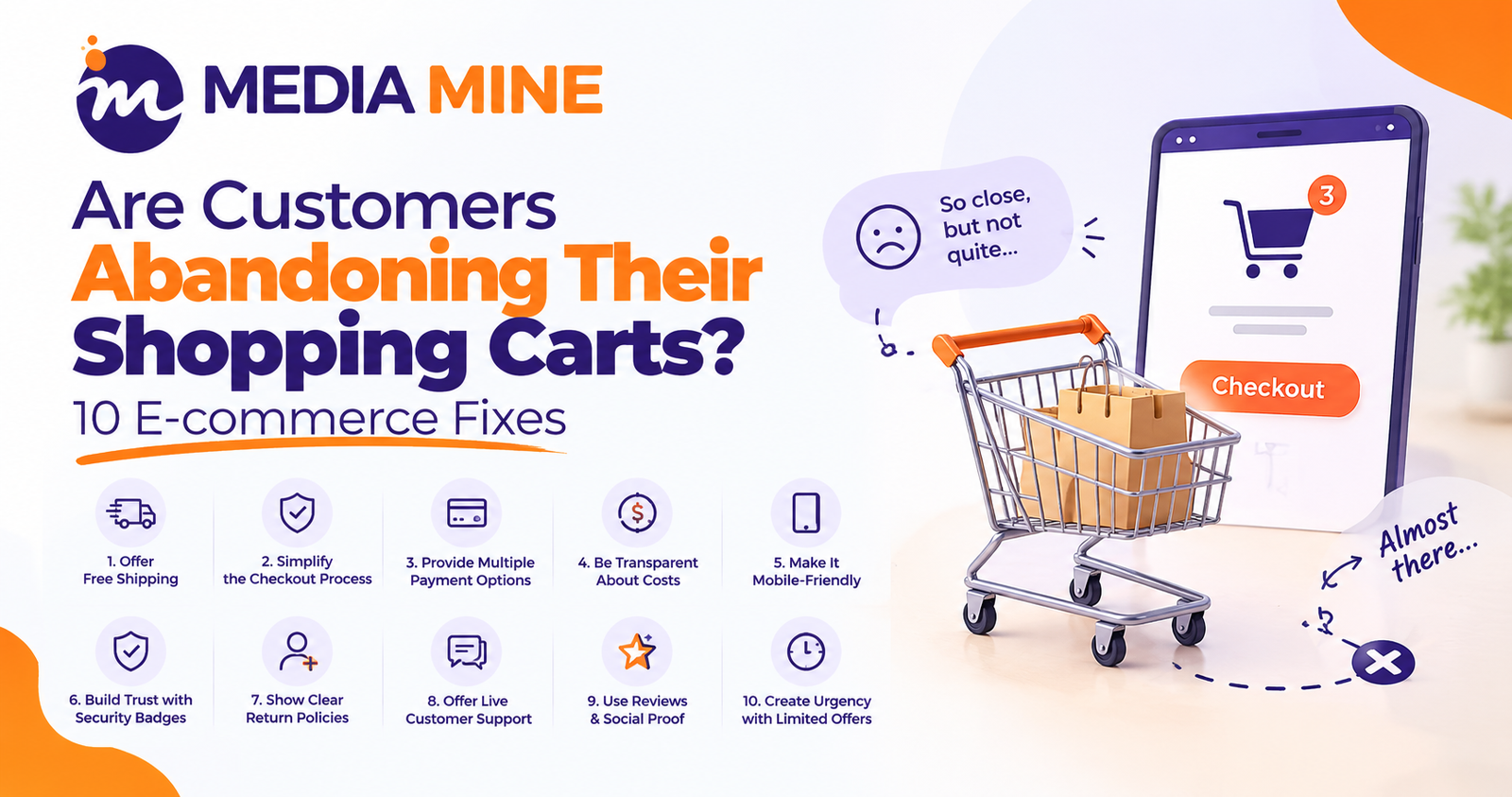
Quick answer: E-commerce cart abandonment happens when a shopper adds products to the cart but leaves without paying. The most common causes are unexpected extra costs, forced account creation, long checkouts, limited payment options and low trust. You can reduce it by showing total costs early, offering guest checkout, simplifying the form, adding local payment methods and following up with recovery messages.
If your store gets traffic and add-to-cart clicks but few completed orders, e-commerce cart abandonment is likely the leak. Industry research from the Baymard Institute puts the average rate at around 70%, which means roughly 7 out of 10 shoppers leave before paying. The good news is that most of those exits are fixable. This guide explains why shoppers leave and gives you 10 practical fixes to bring them back.
What Is E-commerce Cart Abandonment?
E-commerce cart abandonment is when a visitor adds items to an online cart but does not complete the purchase. It is different from browsing without intent. These shoppers wanted something enough to add it to the cart, so they are your warmest lost leads.
How to calculate your rate:
Cart abandonment rate = (1 − completed purchases ÷ carts created) × 100
For example, if 1,000 carts were created and 300 orders were completed, your abandonment rate is 70%.
Why Shoppers Abandon Carts
Shopping cart abandonment usually comes down to friction, cost or trust. These are the most common reasons:
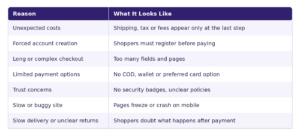
How to Reduce Cart Abandonment: 10 Proven Fixes
1. Show the Total Cost Early
Surprise charges are one of the biggest reasons people leave. Show shipping estimates on the product or cart page, and make taxes and fees visible before checkout.
2. Offer Guest Checkout
Forcing registration adds friction at the worst moment. Let shoppers pay as guests and offer account creation after the order is placed.
3. Simplify the Checkout Form
Strong e-commerce checkout optimization starts with fewer fields. Remove anything you do not need, use autofill and address suggestions, and keep the form to one or two steps. A clean layout also helps, and good UI/UX design makes each step feel effortless on both desktop and mobile.
4. Add the Payment Methods Your Customers Use
If you sell in Pakistan, relying on cards alone can cost you sales. Offer cash on delivery, JazzCash, Easypaisa and bank transfer alongside cards, so shoppers can pay the way they prefer.
5. Build Trust at Checkout
Display secure payment badges, clear return and refund policies, contact details and real customer reviews. Shoppers hesitate when they are unsure who they are paying.
6. Speed Up Your Store
Every extra second of loading time pushes more shoppers away, especially on mobile networks. Compress images, reduce heavy scripts and use reliable hosting. If your pages feel sluggish, see our guide on why your website is slow and how to fix it.
7. Make Checkout Mobile-First
Most online shoppers browse on phones. Use large buttons, numeric keypads for phone and card fields, and sticky “Place Order” buttons. Test the full checkout on a real phone, not just a desktop preview.
8. Send Cart Recovery Emails and WhatsApp Messages
One of the most effective cart abandonment solutions is a timely follow-up. Send a reminder within an hour, a second message after 24 hours and, if suitable, a small incentive such as free delivery. WhatsApp works especially well in Pakistan because open rates are high. You can set this up with email and WhatsApp marketing services.
9. Retarget Abandoned Shoppers With Ads
Remind visitors of the exact products they left behind using dynamic retargeting. Our guide on Meta Ads services explains how to turn ad clicks into qualified leads and sales.
10. Test, Measure, and Improve
Check where users drop off using analytics, heatmaps, and session recordings. Then A/B test one change at a time, such as button text, form length, or shipping messaging. Small gains add up when they apply to every visitor.
Cart Abandonment Solutions: What to Fix First
If you cannot do everything at once, prioritize in this order:
- Hidden costs and guest checkout: quick changes with big impact
- Payment methods and mobile experience: crucial for local buyers
- Recovery emails and WhatsApp: recovers sales you have already lost
- Speed and testing: ongoing improvements
How to Reduce Your Shopping Cart Abandonment Rate Long Term
To reduce your shopping cart abandonment rate over time, treat checkout as a product that needs regular review. Track your rate monthly, compare mobile versus desktop, and watch which step loses the most users. If your current platform limits what you can change, a better-built store may be the answer. Our e-commerce solution page shows how we build stores that are easy to manage and easy to shop from. For deeper custom features such as special checkout flows or integrations, read our guide on how to choose a software house in Lahore.
Final Thoughts
E-commerce cart abandonment will never reach zero, but it can drop significantly with the right fixes. Be transparent about costs, remove friction, offer local payment options, build trust, and follow up with shoppers who leave. Even a small improvement in checkout completion can raise revenue without spending more on traffic.
FAQs
1. What is e-commerce cart abandonment?
It is when a shopper adds products to an online cart but leaves without completing the purchase. It is a key measure of how well your checkout works.
2. What is a good cart abandonment rate?
Averages are around 70%, so anything below that is generally strong. Rates vary by industry and device, so compare your own numbers over time.
3. Why do customers abandon their shopping carts?
The main reasons are unexpected costs, forced account creation, long checkouts, limited payment methods, security concerns and slow or buggy websites.
4. How can I reduce cart abandonment quickly?
Show total costs early, enable guest checkout, shorten the form, add popular payment options and send recovery emails or WhatsApp messages.
5. Do cart recovery emails really work?
Yes. Reminder emails and messages bring back shoppers who were already interested. Timing, a clear product reminder and a simple link back to the cart make them more effective.
6. What is e-commerce checkout optimization?
It is the process of improving every step from cart to payment so that more shoppers finish their purchase. It covers form design, speed, payment options, trust signals and mobile usability.
7. How do I calculate my shopping cart abandonment rate?
Divide completed purchases by carts created, subtract the result from 1 and multiply by 100.