Quick answer: The best social media marketing agency understands your business goals, shows proven results in your industry, and explains its strategy in plain language. It also reports on leads and sales, not just likes. To choose well, define your goals and budget first. Next, compare agencies on experience, process, pricing, communication, and contract terms. Finally, ask for case studies and confirm that you will own your accounts.
Key takeaways
- Define your goals and budget before you speak to any agency.
- Judge agencies by business results such as leads and sales, not by followers and likes.
- A good agency asks questions first and sends a quote later.
- Compare scope, not just the final price.
- Guaranteed viral results, vague reports and long lock-in contracts are red flags.
- Above all, keep ownership of your social accounts, ad accounts and content.
- Use the scorecard in this guide to compare agencies fairly.
The Agency That Posted Every Day and Delivered Nothing
Meet Sara. She runs a growing home-décor brand and decided it was time to “take social media seriously.” So she hired an agency that sent a beautiful proposal full of colorful mockups.
Three months later, her Instagram looked gorgeous. Posts went out five times a week, and followers crept upward. However, her inbox was empty, and sales had not moved.
What went wrong? Sara had hired a posting service, not a strategy partner. Nobody had asked who her best customers were or what made them buy. As a result, she paid for activity instead of results.
Sara’s story is more common than most agencies admit. This guide exists to make sure it does not become yours.
Why Your Choice Matters More Than Ever in 2026
Social media is now the front door of most businesses. Customers discover brands on Instagram, TikTok, Facebook, LinkedIn and YouTube long before they visit a website. Besides that, they check your profile, reviews and comments before they trust you with money.
Meanwhile, the platforms keep changing. Algorithms reward short video, genuine conversation and fast response. In addition, AI tools now flood feeds with average content, so standing out takes real strategy and a human touch. Consequently, a weak presence can quietly cost you customers every single day.
A skilled social media marketing agency turns this noisy environment into an advantage. In this guide, you will learn what agencies actually do, how to compare them and what they cost. You will also get a scorecard, a question list and a 90-day roadmap you can use right away.
What Does a Social Media Marketing Agency Do?
A social media marketing agency is a team of strategists, designers, writers, video editors and ad specialists that plans, creates, publishes and measures social media activity to help a business reach its goals. Those goals usually include brand awareness, lead generation, sales and customer loyalty.
In simple terms, the agency becomes an extension of your marketing team. Therefore, it handles the daily work while you focus on running the business.
The Orchestra Analogy
Think of social media marketing as an orchestra. The strategist is the conductor, and the designers and video editors are the musicians. Meanwhile, the ad manager adds volume where it matters. Finally, the analyst checks that the music reaches the audience. A freelancer can play a good solo, but a full performance needs the whole team.
Marketing Company vs Management Agency vs Freelancer
These terms overlap, so a quick comparison helps:
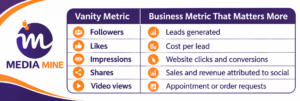
For most small and mid-sized businesses, an agency offers the best balance. After all, you gain a full team without paying several full-time salaries.
Social Media Marketing Services You Should Expect
Good social media marketing services cover the whole journey, from research to reporting. Before you compare agencies, check whether each one offers the following:
- Strategy and audience research: goals, customer personas, competitor analysis, and platform selection
- Content creation: graphics, reels, short videos, carousels, and captions
- Content calendar and publishing: planned, consistent posting
- Community management: also includes replies to comments, messages, and reviews
- Paid social advertising: campaigns on Meta, TikTok, LinkedIn, and YouTube
- Influencer and UGC support: in addition, creator partnerships and customer content
- Analytics and reporting: finally, monthly insights tied to your goals
Paid Ads: The Part Many Businesses Overlook
Organic content builds trust, but paid ads speed up results. Therefore, ask any agency how it handles targeting, budgets, creative testing and retargeting. If you want to understand this area first, explore our overview of Meta ads services.
Step 1: Define Your Goals and Budget First
Before you contact any agency, write down what you want social media to achieve. Without clear goals, even the best agency cannot prove its value.
Pick one or two main objectives from this list:
- Generate more qualified leads
- Increase online or in-store sales
- Also, build brand awareness in a new market
- Grow an engaged community
- Finally, support a product launch or event
Turn Goals Into Numbers
“More engagement” is a wish, while “40 qualified leads per month” is a goal. For example, a clinic might aim for 30 appointment requests monthly. An online store, on the other hand, might target a specific return on ad spend. Numbers like these let you judge the agency fairly later.
Plan Two Budgets, Not One
Most businesses need two budgets: the agency fee and the ad spend. Many owners forget the second one, so campaigns starve and results disappoint. As a rule of thumb, ask each agency to suggest an ad budget that fits your goals. Then decide what is realistic.
Step 2: Check Experience and Real Results
Experience matters, but relevant experience matters more. For instance, an agency that grew restaurants may not understand B2B software. Therefore, ask for case studies from your industry or a close match.
What a Strong Case Study Includes
Real proof goes far beyond a screenshot of follower growth. Look for these elements:
- A clear starting problem and goal
- Also, the strategy used and the reasoning behind it
- Measurable results such as leads, sales, cost per lead, or return on ad spend
- Likewise, the timeline in which results appeared
- Finally, a client name or testimonial that you can verify
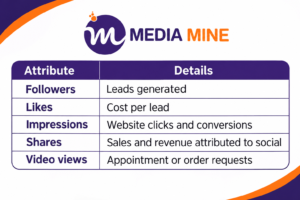
Vanity Metrics vs Business Metrics
A post with 10,000 views feels exciting. Yet it means little if nobody contacts the business. In contrast, 50 qualified inquiries from a modest campaign can transform your month.
Spot the Difference Between Case Studies and Claims
Claims sound impressive, such as “we boosted engagement massively.” Case studies, however, include numbers, dates and context. If an agency can only offer claims, treat that as a gentle warning.
Step 3: Evaluate Their Strategy and Process
A trustworthy agency starts with questions, not a price. During the first call, it should ask about your customers, sales process, competitors and past results. If the conversation is mostly about packages, the agency probably sells templates.
What a Solid Process Looks Like
A professional process usually follows five stages:
- Audit and research: first, a review of your current accounts, competitors and audience
- Strategy: next, goals, platforms, content themes and a posting plan
- Content production: then creation, approval and scheduling
- Campaign launch: organic content plus paid ads where needed
- Reporting and optimization: finally, monthly reviews and improvements
Posting Frequency Is Not a Strategy
Some agencies lead with “we will post five times a week.” That is a tactic, not a plan. In contrast, a real strategy explains who you are speaking to, what they care about and why they should act. Posting simply delivers the message.
Social Media Should Not Work Alone
Social media performs best when it connects with SEO, email, paid ads and your website. To see how these channels fit together, read our digital marketing strategy guide for small businesses.
Step 4: Understand Pricing and What Is Included
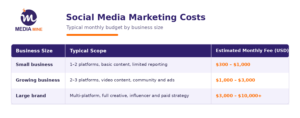
Social media marketing pricing depends on scope, number of platforms, content volume and whether ad management is included. There is no universal rate. Because of this, compare what each package contains rather than only the total.
The ranges below are rough industry estimates for monthly management fees, excluding ad spend:
What About Pakistan?
Local agencies usually charge less than agencies in the US or Europe. As a rough guide, small packages in Pakistan often start around PKR 40,000 to 150,000 per month. Growing businesses may pay PKR 150,000 to 500,000, while large brands go higher. These are estimates, so always request a detailed quote.
What to Compare in Every Quote
- Number of posts, reels and videos per month
- Whether ad management is included or billed separately
- Also, who pays for stock content, tools and paid promotion
- How many revisions are allowed
- In addition, the format and frequency of reports
- Finally, contract length and cancellation terms
Why the Cheapest Offer Often Costs the Most
Extremely cheap packages tend to rely on templates, copied captions and no real strategy. In the end, you pay twice: once for the weak work and again to fix it. Therefore, let value, not the lowest price, drive your decision.
Step 5: Review Communication and Reporting
Even a talented agency fails when communication breaks down. For that reason, ask who your day-to-day contact will be and how often you will speak. Also find out how quickly the team replies.
Reporting is the clearest test of transparency. A good monthly report should include:
- Reach, engagement and follower growth
- Also, leads, clicks and conversions
- Cost per result for paid campaigns
- Finally, what worked, what did not and what happens next
Numbers Need a Story
Charts alone are not enough. Instead, a strong report explains why results changed and what the team will do next. Without that insight, you cannot make better decisions.
Ask for a Sample Report Before You Sign
This simple request reveals a lot. A confident agency shares a sample, with client details hidden, without hesitation. By contrast, an agency that avoids the question may have little to show.
Use This Agency Scorecard
Comparing agencies by gut feeling leads to bias. Instead, score each agency out of 100 using this table.
| Criteria | Points | What to Look For |
|---|---|---|
| Relevant experience and case studies | 25 | Results in your industry, with real numbers |
| Strategy and process | 20 | Discovery questions, audit, clear plan |
| Reporting and transparency | 15 | Sample reports, plain-language insights |
| Pricing clarity | 15 | Detailed scope, no hidden costs |
| Communication and team | 15 | Named contact, response time, experience |
| Contract fairness | 10 | Flexible terms, account ownership |
How to Read the Results
A score of 80 or above marks a strong candidate. Meanwhile, a score between 60 and 79 deserves more questions. Anything lower suggests you should keep looking. Even better, ask two or three teammates to score independently, and then compare notes.
Red Flags to Avoid
Some warning signs appear early. Watch for these:
- Guaranteed viral results. No honest agency can promise virality.
- Fake followers or bought engagement. These damage reach and credibility.
- Missing case studies or references. Real proof should be easy to share.
- Vague reports. In most cases, unclear numbers hide weak results.
- Long lock-in contracts. Trust should be earned month by month.
- Account ownership issues. For example, an agency should never own your pages or ad accounts.
- One-size-fits-all packages. After all, your business is not identical to anyone else’s.
- Pressure tactics. Likewise, “sign today for a special price” is rarely a good sign.
The “Best at Everything” Trap
Be cautious when an agency claims expertise in every industry and platform. In fact, specialists usually deliver stronger results than generalists. A focused agency knows which formats work for your audience and which mistakes to avoid.
12 Questions to Ask Before You Hire
Use this list during your discovery calls. Together, the answers reveal how the agency thinks and works.
- What results have you achieved for businesses like mine?
- Who will manage my account, and what is their experience?
- How do you plan content and handle approvals?
- Which metrics do you use to measure success?
- Is ad management included, and how do you optimize campaigns?
- Also, who owns the accounts, creative files and ad data?
- How do you use AI tools, and how do you keep content original?
- Next, what does onboarding look like?
- How long until we should see results?
- If results fall short of our goals, what happens?
- Finally, what are the contract terms, and how can I cancel?
- Can I speak with a current or past client?
Questions 7 and 10 are especially revealing. An honest agency answers both clearly, whereas a weak one dodges.
Which Platforms Should Your Business Focus On?
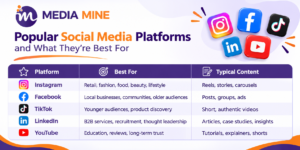
The right platforms are the ones where your customers already spend time, not every platform available. Spreading thin across six channels usually weakens all of them.
Think About What Happens After the Click
In Pakistan, many customers move from a social post straight to WhatsApp to ask questions. For that reason, a good agency also plans how those conversations continue. Otherwise, interested buyers may drift away before they reach out.
How AI Is Changing Social Media Agencies in 2026
AI tools now help agencies research faster, draft captions and edit video. That is good news, because it can lower costs and speed up delivery. Nevertheless, AI also makes average content very easy to produce.
What Good Agencies Do With AI
The best teams use AI for speed and humans for judgment. For example, AI may suggest ideas or summarize data. Meanwhile, strategists and creatives shape the message, check facts and protect your brand voice. In other words, AI assists, but it does not replace thinking.
What to Ask
Ask each agency where it uses AI and where it does not. A transparent answer shows maturity. On the other hand, an agency that hides its tools or promises “fully automated growth” deserves extra caution.
Agency, Freelancer or In-House: Which Is Right for You?
An agency suits businesses that need a full team and a proven process. A freelancer fits simple tasks on a tight budget. In-house hiring works when social media is a core, full-time function.
An agency usually wins on balance. It provides strategists, designers, video editors and ad managers together. Moreover, you get backup when someone is unavailable. A freelancer may be cheaper but cannot cover every skill. In-house hiring, meanwhile, offers total control, yet it adds salaries, training and tool costs.
If you are also comparing broader marketing partners, our guide on what a digital marketing agency does shows where social media fits in the bigger picture.
Contract Checklist: Protect Yourself Before You Sign
A clear contract prevents most disputes. Make sure it covers the following points:
- Scope of services and monthly deliverables
- Fees, ad spend handling and payment dates
- In addition, the reporting schedule and format
- Contract length, notice period and cancellation terms
- Also, ownership of accounts, content, designs and ad data
- Confidentiality and permission to use your brand assets
- Finally, what happens when the contract ends
Own Your Accounts, Always
You should hold admin access to every page, ad account and analytics tool. Consequently, you can switch agencies at any time without losing followers, creative files or campaign history.
Your First 90 Days: A Realistic Roadmap
Social media is not instant, so expectations matter. The following roadmap shows what a healthy start looks like.
Days 1–30: Foundation
First, the agency audits your accounts, studies competitors and builds the strategy. Tracking, content themes and the posting calendar get set up at this stage too. Early results may be modest. Still, the groundwork decides everything that follows.
Days 31–60: Testing
Next, content goes live in different formats, and small ad campaigns begin. The team watches what your audience responds to. As a result, you start seeing which messages attract real interest.
Days 61–90: Scaling
By now, the agency can double down on winning content and improve ad targeting. Consequently, you should see clear trends in leads, cost per result and engagement. For extra ideas that agencies often use, read these social media marketing secrets.
A Note on Patience
Organic growth often takes three to six months to show a firm trend. Paid campaigns, however, can produce early data within weeks. Therefore, agree on milestones together and review them every month.
Ready to Work With a Social Media Partner?
At MediaMine360, we help businesses turn social media into a steady source of leads. Our approach combines clear strategy, creative content and transparent reporting. Furthermore, our digital marketing services include social media marketing alongside SEO, paid ads and email, so every channel works together. When you are ready, contact our team to discuss your goals and receive a tailored proposal.
Frequently Asked Questions (FAQs)
What does a social media marketing agency do?
It plans, creates, publishes and measures content on social platforms. In addition, the agency manages paid ads, replies to your audience and reports on results.
How do I choose the best social media marketing agency?
Start by defining your goals and budget. Then compare agencies on relevant experience, case studies, strategy, pricing transparency and reporting quality. Finally, check the contract terms before you sign.
How much does a social media marketing agency cost?
Monthly fees usually range from about $300 for a small package to $3,000 or more for a full-service plan. However, the final price depends on platforms, content volume and ad management. Ad spend is normally separate.
What is the difference between a social media marketing company and a management agency?
A marketing company usually covers strategy, content and paid advertising. By contrast, a management agency focuses on daily posting, community replies and reporting. Some businesses need both.
What are social media marketing services?
Typical services include strategy, content creation, scheduling and community management. Paid advertising, influencer support and analytics are usually part of the mix as well. Most agencies bundle these into monthly packages.
How long does it take to see results from social media marketing?
Paid campaigns can show early data within weeks. Organic growth, on the other hand, usually takes three to six months to show a clear trend.
Should I hire an agency or a freelancer?
Agencies suit businesses that need strategy, design, video and ads together. Freelancers work better for simple tasks and small budgets. Therefore, your goals and workload should guide the decision.
Which social media platforms should my business use?
Pick platforms where your customers already spend time. For example, Instagram and Facebook suit many consumer brands, while LinkedIn fits B2B companies. A good agency recommends platforms after researching your audience.
How do I know if an agency is delivering results?
Check your monthly reports for leads, conversions, cost per result and growth against your agreed goals. If the reports show only likes and followers, ask for deeper metrics.
Who should own my social media accounts?
You should. Always keep admin access to your pages, ad accounts and creative files. Consequently, you can switch agencies without losing your assets.
Do I need a social media agency if I already run ads?
Often, yes. Paid ads work better when organic content builds trust and gives people a reason to follow. Together, they create a stronger funnel.
What should be in a social media agency contract?
The contract should state the scope of services, deliverables, fees and reporting. It should also cover contract length, cancellation terms and ownership of accounts and content. In short, nothing important should be left unwritten.
Is it worth using an agency that uses AI tools?
Yes, as long as humans guide the strategy and review the output. AI can speed up research and production. However, original thinking and brand voice still need experienced people.
Final Thoughts
Remember Sara? Her story changed when she switched to an agency that began with questions instead of mockups. Together, they defined a goal, focused on two platforms and tracked leads rather than likes. Within a few months, her social channels became a dependable source of enquiries. (This is an illustrative example, not a real client result.)
The lesson is simple. Choosing a social media marketing agency is a business decision, not a design decision. The best partner understands your goals, explains its strategy openly and measures success by results that affect your revenue.
So start by defining what you want. Then compare agencies with the scorecard, ask the 12 questions and walk away from any red flags. With the right partner, social media becomes much more than a posting schedule. In the end, it becomes a reliable engine for growth.