Email is still one of the most reliable channels for building relationships and driving results. Social algorithms change overnight, and ad costs keep rising. However, your email list is an audience you own. At the same time, inboxes are more crowded than ever. Because of stricter privacy rules and smarter spam filters, random newsletters no longer work.
Therefore, you need a solid email marketing strategy. It gives every campaign a purpose, a target audience, and a way to measure success. In this guide, you will learn how to build one step by step. Moreover, you will see how a real organization, the Pakistan Society for the Rehabilitation of the Disabled (PSRD), could apply it.
What Is an Email Marketing Strategy?
An email marketing strategy is a documented plan for how you will use email to reach your goals. First, it covers who you email and what you send. Next, it explains when you send it and which tools you use. Finally, it shows how you measure results.
Sending emails is only a tactic. In contrast, a strategy connects those emails to outcomes like sales, donations, retention, and loyalty.
Why You Need an Email Marketing Strategy in 2026
There are four main reasons to plan your email marketing carefully.
- You own the channel. As a result, no platform can take your list away.
- Inbox rules are stricter. For example, Gmail and Yahoo now require authentication and easy unsubscribes, so sloppy sending hurts deliverability.
- Personalization is expected. Otherwise, generic blasts get ignored or marked as spam.
- Email supports every funnel stage. In other words, it works from first contact to repeat action.
Step 1: Set Clear, Measurable Goals
First, decide what you want email to achieve. Vague goals like “get more engagement” are hard to track. Instead, try goals like these:
- Grow your subscriber list by 20% in six months
- Increase repeat purchases or repeat donations from email by 15%
- Generate 50 qualified leads per month
- Recover 10% of abandoned carts
In addition, tie every goal to a metric. That way, you will know whether your strategy is working.
Step 2: Know Your Audience
You can’t write relevant emails without understanding who reads them. Therefore, build simple audience profiles using
- Demographics and location
- Purchase or donation history and browsing behavior
- Pain points, needs, and goals
- Their stage in the journey, such as new lead, first-time buyer, or loyal supporter
Surveys, website analytics, and CRM data are good sources. Similarly, direct replies from subscribers can reveal what they really care about.
Step 3: Build a Quality Email List
A smaller, engaged list beats a large, cold one. So, grow your list ethically with these methods:
- Lead magnets such as checklists, templates, ebooks, or discount codes
- Website sign-up forms in your header, footer, blog posts, and exit-intent popups
- Gated content like webinars or exclusive guides
- Social media promotion that sends followers to a dedicated sign-up page
Also, always use a clear opt-in and follow privacy laws such as GDPR and CAN-SPAM. Above all, never buy email lists. They damage your sender reputation and deliver poor results.
Step 4: Segment Your Subscribers
Segmentation is one of the biggest levers in any email marketing strategy. Instead of sending the same message to everyone, divide your list by:
- New subscribers vs. long-time customers or supporters
- Interests or product categories
- Purchase or donation behavior
- Engagement level, such as active, inactive, or at risk
- Location or language
As a result, segmented campaigns usually perform better. After all, the content matches what people actually care about.
Step 5: Choose the Right Types of Emails
A strong strategy uses a mix of email types. Here are the most useful ones:
- Welcome emails: These introduce your brand and set expectations. Usually, they get the highest engagement.
- Newsletters: These share useful content and updates, so you stay top of mind.
- Promotional or campaign emails: These announce offers, launches and appeals.
- Behavioral emails: These are triggered by actions like abandoned carts, browsing or downloads.
- Re-engagement emails: These win back subscribers who have gone quiet.
- Transactional emails: These include confirmations and receipts, which people open often.
Step 6: Use Automation and AI Wisely
In 2026, automation is a core part of any email marketing strategy. For example, you can set up flows that run on their own:
- A welcome series of 3 to 5 emails over the first two weeks
- Abandoned cart and browse abandonment sequences
- Post-purchase or post-donation follow-ups
- Birthday or anniversary messages
- Win-back campaigns for inactive subscribers
Meanwhile, AI tools can help with subject line ideas, send-time optimization and content drafts. However, keep a human in charge of tone, accuracy and brand voice. Otherwise, your emails may sound robotic, and that hurts trust.
Step 7: Write Emails People Want to Open and Read
Even a perfect plan fails if the email itself is weak. Therefore, focus on these basics:
- Subject lines: Keep them clear, specific and curiosity-driven. Also, avoid spammy words and excessive punctuation.
- Preview text: Use it to support the subject line instead of repeating it.
- Opening lines: Get to the point quickly and speak to the reader’s need.
- One main goal per email: In fact, a single call to action (CTA) converts better than five competing links.
- Scannable formatting: Short paragraphs, headings and bullet points work well on mobile.
- Mobile-first design: Because most people read on phones, use a single-column layout and large buttons.
Step 8: Personalize Beyond the First Name
Today, personalization goes deeper than “Hi [Name].” For instance, you can tailor:
- Recommendations based on past behavior
- Content based on interests
- Send times based on when each subscriber usually engages
- Messages based on lifecycle stage
Above all, be transparent about how you use data. Likewise, collect only what you actually need.
Step 9: Protect Your Deliverability
If your emails land in spam, nothing else matters. To stay in the inbox, follow these rules:
- Authenticate your domain with SPF, DKIM and DMARC
- Keep spam complaint rates very low
- Clean your list regularly and remove inactive contacts
- Make unsubscribing easy with a visible link
- Send consistently instead of in sudden large bursts
- Avoid misleading subject lines
Step 10: Plan Your Sending Schedule
Consistency builds trust. So, decide how often you will email, whether weekly, biweekly or monthly, and stick to it. Then, build a content calendar that maps out campaigns, seasonal moments and educational content in advance.
Note that there is no universal “best time” to send. Instead, test different days and times with your own audience.
Step 11: Test, Measure and Improve
Finally, track the metrics that connect to your goals:
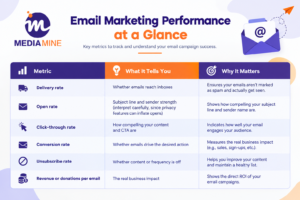
In addition, run A/B tests on one element at a time, such as subject lines, CTAs, send times or layouts. Then, review your results monthly and adjust your plan.
Email Marketing Strategy Case Study: A Nonprofit Blueprint (PSRD)
Background
The Pakistan Society for the Rehabilitation of the Disabled (PSRD) is a non-profit charity founded in 1957 in Lahore. It provides physiotherapy, prosthetics and orthotics services. Moreover, it relies on donations from individuals and organizations. It also works with volunteers and has received positive feedback from visitors and partners in Pakistan and abroad.
Organizations like this have a strong story. However, they need a steady way to stay in touch with supporters between one-off donation appeals. For this reason, email is a very good fit.
Goals
First, the organization wants to convert one-time donors into regular monthly donors. Second, it wants to attract more volunteers and corporate partners. Finally, it needs to keep supporters informed about where their money goes.
Strategy
1. Segment supporters. To begin with, individual donors, overseas donors, volunteers, corporate contacts and patient families should each get different messages.
2. Build a welcome series. Next, send four emails. The first shares the story of PSRD since 1957. Then, the second gives an overview of its services. After that, the third shares one impact story. Finally, the fourth includes a clear donate or volunteer call to action.
3. Show impact, not just appeals. For example, a thank-you email right after a donation builds trust. Similarly, an impact update within a week keeps donors connected. In addition, a monthly newsletter can feature one patient story (with consent), one project update and one CTA.
4. Use seasonal campaigns. Ramadan, Zakat and Eid appeals reach donors when giving intent is highest. As a result, these campaigns can bring in more support than regular months.
5. Re-engage quiet subscribers. Finally, send a short “we miss you” sequence to contacts who have been inactive for 90 days. Afterward, remove those who still do not respond.
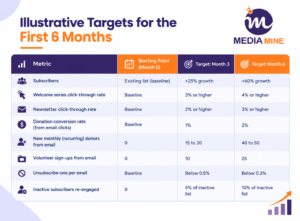
Track these numbers monthly and compare them against your baseline. Then, adjust your content, segments and send schedule based on what performs best.
Key Takeaways
- A strong story is not enough. In addition, you need segmentation and a consistent schedule.
- Impact updates keep donors engaged long after the first gift.
- Overall, the same eleven steps work for nonprofits, ecommerce brands and service businesses.
Common Email Marketing Mistakes to Avoid
Even experienced marketers make these errors. Fortunately, they are easy to fix.
- Sending the same message to your entire list
- Ignoring mobile users
- Using too many CTAs in one email
- Neglecting list hygiene
- Focusing only on asks or promotions, and never offering value
- Not testing or tracking results
Final Thoughts
A strong email marketing strategy comes down to a few fundamentals. First, set clear goals. Second, build a healthy list. Third, segment smartly and share useful content. Finally, keep testing.
To get started, create a welcome series and a few basic segments. Then, add automation and personalization as you learn what works. Overall, email rewards brands and organizations that respect their subscribers’ time. Therefore, deliver real value in every message, and your list will become one of your most valuable assets.
Frequently Asked Questions (FAQs)
What is an email marketing strategy?
An email marketing strategy is a plan that defines your goals, target audience, email types, sending schedule, tools and metrics. As a result, every email supports a business objective instead of being sent randomly.
Is email marketing still effective in 2026?
Yes. Email remains one of the most effective digital channels because you own your audience and can reach subscribers directly. In addition, it supports personalization and automation at every stage of the customer journey.
How often should I send marketing emails?
It depends on your audience and industry. For example, many brands send one to four emails per month, while ecommerce businesses may send more often. First, start with a consistent schedule. Then, watch unsubscribe rates and engagement to find the right balance.
How do I grow my email list?
Offer a valuable lead magnet and add sign-up forms across your website. Also, promote your newsletter on social media and run giveaways or webinars. However, always get proper consent, and never buy lists.
Can nonprofits use an email marketing strategy?
Yes. For instance, nonprofits can use email for donor welcome series, impact updates, volunteer recruitment and seasonal appeals. The PSRD blueprint above shows how this can work in practice.
What is the best email marketing tool?
There is no single best option. Popular platforms include Mailchimp, Klaviyo, Brevo, ActiveCampaign and HubSpot. Therefore, choose based on your budget, list size, automation needs and integrations.
What is a good email open rate?
Averages vary by industry, but many businesses see open rates between 20% and 40%. However, privacy features can inflate open data. For this reason, pay closer attention to clicks, conversions and revenue.
How can I improve email deliverability?
First, authenticate your domain with SPF, DKIM and DMARC. Next, keep your list clean and send relevant content. Finally, make unsubscribing easy and avoid spammy subject lines.
What is email segmentation and why does it matter?
Segmentation means dividing your list into groups based on behavior, interests or demographics. Because targeted emails feel more relevant, they lead to higher engagement and conversions.
Should I use AI in my email marketing?
Yes, AI can help with subject lines, send-time optimization and drafts. However, review everything before sending so your emails stay accurate and on-brand.