
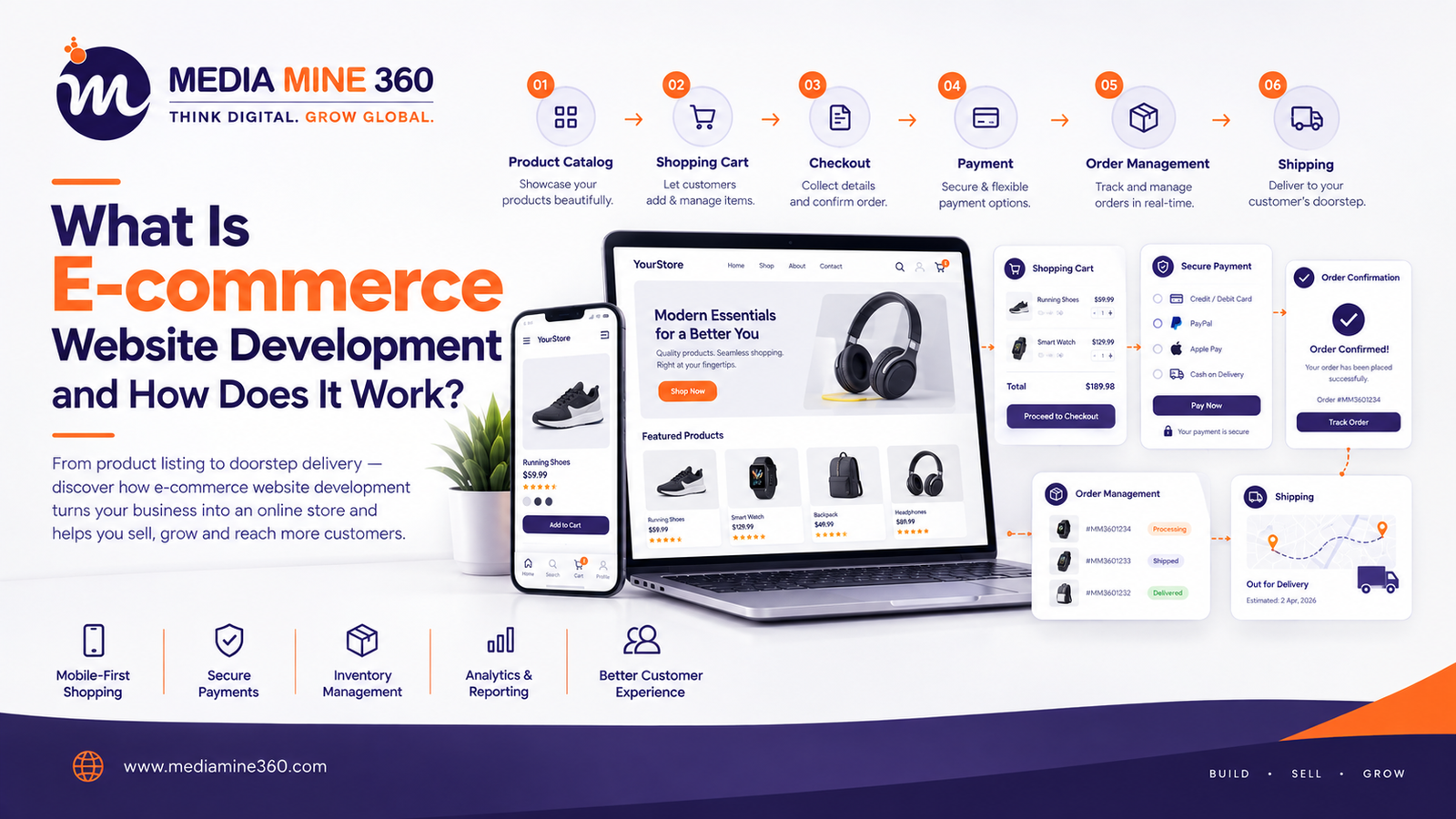
E-commerce has completely changed how businesses sell products and services. Today, small boutique brands and large retailers alike want a piece of the online market. This is exactly where e-commerce website development comes in. If you’re planning to launch an online store, or upgrade an existing one, this guide will help.
In this article, we’ll explain what e-commerce website development means. We’ll also cover how it works, step by step. Finally, we’ll show why the right agency can make a real difference to your online business.
What Is E-commerce Website Development?
E-commerce website development is the process of building a fully functional online store. Customers can browse products, add them to a cart, and pay securely. They can also track their orders, without ever visiting a physical shop. In short, it combines design, coding, payment integration, security, and user experience. Together, these elements create a platform that looks good and converts visitors into paying customers.
Unlike a regular website, an e-commerce site needs several parts working together. These include product catalogs, inventory management, and shopping carts. Payment gateways, shipping calculators, and customer accounts matter too. As a result, getting everything to work smoothly requires real technical expertise. That’s why many businesses choose experienced e-commerce website development services, instead of building alone.
How Does E-commerce Website Development Work?
Generally, the process follows a clear, structured path. Here’s how it typically unfolds.
1. Research and Planning
First, every solid project starts with understanding the business and its audience. Competitors are studied too. Then, this stage defines the store’s structure and features. It also decides the platform — Shopify, WooCommerce, Magento, or a custom build.
2. UI/UX Design
Next, the team designs the look and feel of the store. A clean, intuitive layout keeps visitors engaged. It also reduces cart abandonment. Since most shoppers browse on their phones, mobile responsiveness is critical here.
3. Development and Coding
After that, the actual online store website development begins. Developers build the front end, which is what customers see. They also build the back end, including databases and admin panels. Consequently, the store can function reliably at scale.
4. Payment Gateway and Shipping Integration
At this stage, secure payment methods are added. These include cards, digital wallets, and cash on delivery. Shipping and logistics tools are integrated as well. So, orders move smoothly from checkout to delivery.
5. Testing
Before launch, the site is tested thoroughly. Page speed, checkout flow, and mobile performance are all checked. Security gets tested too. This way, bugs are caught before real customers find them.
6. Launch and Ongoing Support
Finally, once the store goes live, the work isn’t over. Continuous monitoring, updates, and optimization matter a lot. Often, this is the real difference between a store that grows and one that stalls.
For a closer look at how a complete, managed solution works, visit our e-commerce solution page.
Why Hire a Professional E-commerce Website Development Company?
DIY builders work fine for small hobby projects. However, a serious online business usually needs more. Proper architecture, SEO-friendly structure, and secure payment processing all matter. Scalability matters too, for future growth. A professional e-commerce website development company brings all of this together. As a result, you save time and avoid costly rework later.
At Media Mine 360, our team specializes in end-to-end e-commerce web development. We handle strategy, design, development, and long-term growth support. Simply put, we don’t just build stores we build systems designed to sell. You can explore our services on our web development page. Additionally, check our digital marketing services if you need more traffic after launch.
Case Studies: Real E-commerce Projects by Media Mine 360
Over time, we’ve worked on many e-commerce projects across different industries. Each one brought its own unique challenge. Here are a few highlights.
Pur.com.pk — A skincare and beauty brand needed a clean, trust-building storefront. Therefore, we focused on fast load times and clear product categorization. We also optimized the checkout flow for mobile shoppers.
Modluxcreations.com — A modern furniture and home décor store where visuals mattered most. So, our team built a design-forward platform with high-quality product galleries. The result is a smooth, premium browsing experience.
Kidsselection.pk — A kids’ fashion store needed an easy-to-navigate catalog. It required multiple filters, including age, size, and category. Consequently, we built the store to handle high product volume without slowing down.
Awais International — A Lahore-based IT wholesaler and authorized channel partner of HP, Dell, Lenovo, Canon, and Microsoft, selling laptops, desktops, printers, and monitors to businesses and resellers across Pakistan. Since the client serves both wholesale resellers and individual buyers, we built a clean, catalog-heavy store with organized product categories, easy navigation, and clear product specs to support high-volume browsing and quick decision-making.
Overall, each project reflects our approach: understand the brand, plan the right structure, then build for growth. You can browse more of our work on our portfolio page.
Frequently Asked Questions
1. How long does e-commerce website development take?
Generally, a basic store takes 3–4 weeks. However, a fully custom platform with advanced features may take 8–12 weeks or more.
2. Which platform is best for e-commerce website development?
It depends on your needs. For instance, Shopify and WooCommerce suit small to mid-sized stores well. Meanwhile, Magento or custom development suits larger, high-volume businesses.
3. How much does e-commerce website development cost?
Costs vary based on design complexity and required features. Naturally, a simple store costs less than a fully custom solution.
4. Do I need ongoing maintenance after my store launches?
Yes, definitely. Regular updates, security patches, and performance checks keep your store running well. They also help it rank better in search results.
5. Can an existing website be converted into an e-commerce store?
In most cases, yes. Depending on the current platform, it can be upgraded or migrated. Therefore, you don’t always need to start from zero.
Final Thoughts
In the end, e-commerce website development is about more than putting products online. It’s about building a reliable, user-friendly system that turns visitors into customers. Whether you’re starting fresh or upgrading, an experienced team makes the process smoother and more secure.
Ready to build your own online store? Get in touch with our team today, and let’s discuss your project.