
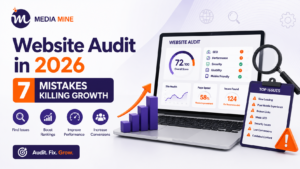
What Is a Website Audit, Really?
Think of a website audit like taking your car in for a full inspection instead of just checking the tire pressure. You’re not just glancing at the surface you’re looking under the hood at everything: speed, structure, content, security, and how well the whole thing actually works together.
A solid audit usually looks at:
- Technical SEO — site speed, mobile-friendliness, whether search engines can even crawl your pages properly
- On-page SEO — your keywords, meta tags, and whether your content is actually saying anything useful
- User experience (UX) and overall design
- Security and other factors tied to website ranking on Google
- Conversion paths — forms, CTAs, and for online stores, the checkout flow
Skip this step, and you’re basically guessing. Running ads, writing content, pushing traffic to a site that quietly repels visitors the moment they land on it.
Why Website Audit Is Important for Small Business Owners Especially
Big companies have entire teams watching analytics dashboards all day. Small businesses? Not so much. Most owners are juggling ten things at once, and website performance rarely makes it to the top of the list until leads start drying up and nobody can figure out why.
A broken contact form might sound like a small thing. But if you’re a small business and every lead genuinely matters, that “small thing” could be the reason someone chose a competitor instead. This is exactly where SEO services for small businesses earn their keep — not by fixing everything overnight, but by pointing you toward the two or three issues actually costing you the most.
7 Costly Mistakes a Website Audit Uncovers
1. Slow Page Speed That Drives Visitors Away
People don’t wait around anymore. If your site takes longer than three seconds to load, a good chunk of visitors are already gone before they’ve even seen what you offer.
Fix: This is usually where website speed optimization services come in compressing images, cleaning up bloated code, and setting up proper caching.
2. Ignoring Mobile Optimization
More than half of all web traffic worldwide now comes from phones. If your site isn’t built mobile-first, you’re not just annoying visitors — you’re actively getting pushed down in search results for it.
Fix: Partner with website design and development companies who treat mobile as the starting point, not something bolted on later.
3. Weak or Outdated On-Page SEO
This one comes up in almost every audit we’ve seen: missing meta titles, thin content that says very little, and keywords nobody searches for anymore. Small gaps, but they add up fast.
So, How Does a Website Audit Improve SEO Ranking?
In short — it finds the technical errors, content gaps, and outdated elements holding your pages back, then gives you a clear path to fix them so search engines can actually crawl, index, and rank your site the way it deserves.
4. Broken Links and Navigation Issues
Dead links are more damaging than most people realize. They frustrate visitors, sure, but they also eat into your “crawl budget,” making it harder for Google to find and index the pages that actually matter.
Quick Tip
Don’t wait a full year to check this. Run a link scan every few months, especially if you’re publishing new content regularly.
5. Inconsistent Branding and Website Identity
Your website should feel like you — same colors, same tone, same message, page after page. When that’s inconsistent, visitors pick up on it, even if they can’t quite explain why they don’t trust the site. Weak branding and website identity does that.
6. Poor E-commerce Checkout Experience
For online stores, this is often the single biggest leak in the bucket. A clunky, multi-step checkout is a near-guaranteed way to lose a sale at the last second. It’s one of the first things we look at during an e-commerce website audit.
What We Typically Find
- Way too many checkout steps
- Limited payment options
- No visible trust signals — no reviews, no security badges, nothing to reassure a nervous buyer
7. Underutilized Social Media Integration
Your website and your social presence should be working as a team, not as two separate things. When they’re disconnected, you miss out on real social media and website traffic growth — visitors show up, browse a bit, and leave with no reason to follow you or come back later.
Quick Website Audit Checklist
Grab this before your next audit; it’s a good starting point, even if you’re doing it yourself:
- Page load speed under 3 seconds
- Fully mobile-responsive across devices
- Meta titles and descriptions actually optimized
- No broken links, internal or external
- Branding consistent site-wide
- CTAs clear and functioning
- Checkout process secure and simple (for e-commerce)
- Social links visible and working
- Google Search Console errors reviewed
- Content refreshed within the last 6-12 months
DIY Audit vs. Professional Website Audit Agency
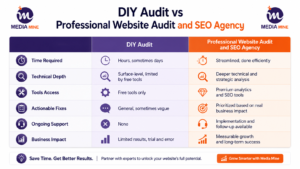
Doing it yourself isn’t a bad first move; it’ll tell you something. But if you’re serious about actually growing, working with the best website audit company you can find means nothing important slips through the cracks, and you’re not left guessing what to fix first.
What Our Team Sees
“Most business owners don’t realize how many small technical issues are quietly working against them until we run a full audit. It’s rarely one big problem; it’s usually five or six smaller ones stacking up over time,” says a member of the Media Mine 360 SEO team.
That lines up with what most digital marketing agencies for website growth tend to find: businesses pouring money into ads and content while the website itself, the thing everyone eventually lands on, stays the weakest part of the whole funnel.
When Should You Run a Website Audit Before Redesign?
If a redesign’s on the horizon, don’t skip this step. A website audit before redesign shows you what’s actually working (so you don’t accidentally throw away hard-earned SEO rankings) and what genuinely needs to change. Skip it, and you risk rebuilding around the wrong assumptions.
Frequently Asked Questions
1. How often should a business audit its website?
Aim for a full audit every 6-12 months, with quicker checks speed and broken links every few months in between.
2. Is a website audit only about SEO?
Not really. SEO’s a big piece of it, but audits also dig into UX, design, security, and how well your site actually converts visitors.
3. Can a website audit really improve sales?
It can, yes. Fixing slow load times, clunky checkouts, and unclear CTAs removes the friction that’s stopping people from buying in the first place.
4. Do small businesses really need professional audit services?
Often more than larger companies do, honestly, small teams simply don’t have the bandwidth to catch these issues on their own before they start costing money.
5. What’s the first step in a website audit?
Usually a technical scan comes first speed, mobile-friendliness, indexing followed by a closer look at content and user experience.
Final Thoughts: Don’t Let Small Issues Cost You Big Growth
A website audit isn’t something you do once and forget about. It’s an ongoing habit for anyone serious about staying competitive online. The businesses that keep reviewing and refining their sites are the ones still climbing the rankings a year from now — while everyone else wonders where their traffic went.
Curious what’s actually happening behind the scenes on your site? Explore our full range of digital marketing services or get a free website audit today and talk to our team directly.
Want to know more about how Media Mine 360 helps businesses worldwide grow smarter online? Follow along for more practical SEO tips on Instagram, Pinterest, and LinkedIn.